Caregiving often happens between appointments. A parent sees a specialist. A spouse gets new instructions. A loved one comes home with a test order, a follow-up plan, or symptoms to monitor.
But caregivers are not always in the room. The visit ends, and they may only hear part of what was said.
For caregivers, better information means better support. The goal is not to take over someone's care. It is to stay aligned, understand what changed, and help when help is needed.
Caregivers need more than a quick update
AARP and the National Alliance for Caregiving estimate that 63 million Americans, nearly 1 in 4 adults, provided ongoing care for an adult or child with a complex medical condition or disability in 2025 [1].
Many caregivers help with scheduling, transportation, follow-up tasks, and family communication. But after a medical appointment, they may hear only:
"The doctor ordered a test."
"We need to come back in a few weeks."
"They changed the plan."
Those updates are useful, but incomplete. Caregivers often need to know what changed, why it changed, what to watch for, and what happens next.
Doctor visits are hard to relay accurately
Medical appointments are stressful and information-heavy. Important context can be lost, including:
- Why a test was ordered
- What symptoms mattered most
- What the doctor wanted monitored
- What options were discussed
- What follow-up timing was recommended
- What questions remain unanswered
Portal notes and after-visit summaries help, but they may not capture the full explanation. A note can document the plan. The conversation often explains the reasoning. That gap is the main reason patients record their visits.
Research on consultation recordings has found benefits for patients, including improved knowledge, recall, feeling informed, decision-making, anxiety, and depression outcomes [2].
Before the visit: agree on what matters
Before the appointment, the patient and caregiver can clarify:
- What is the main reason for the visit?
- What has changed since the last visit?
- What questions should be asked?
- Who needs an update afterward?
- Would it help to record and summarize the visit?
A clear agenda makes the appointment more useful and the follow-up easier.
During the visit: capture the conversation
The most useful part of a doctor visit is often the explanation: what the clinician is considering, why a test is being ordered, what symptoms matter, and when to follow up.
That is hard to recreate from memory.
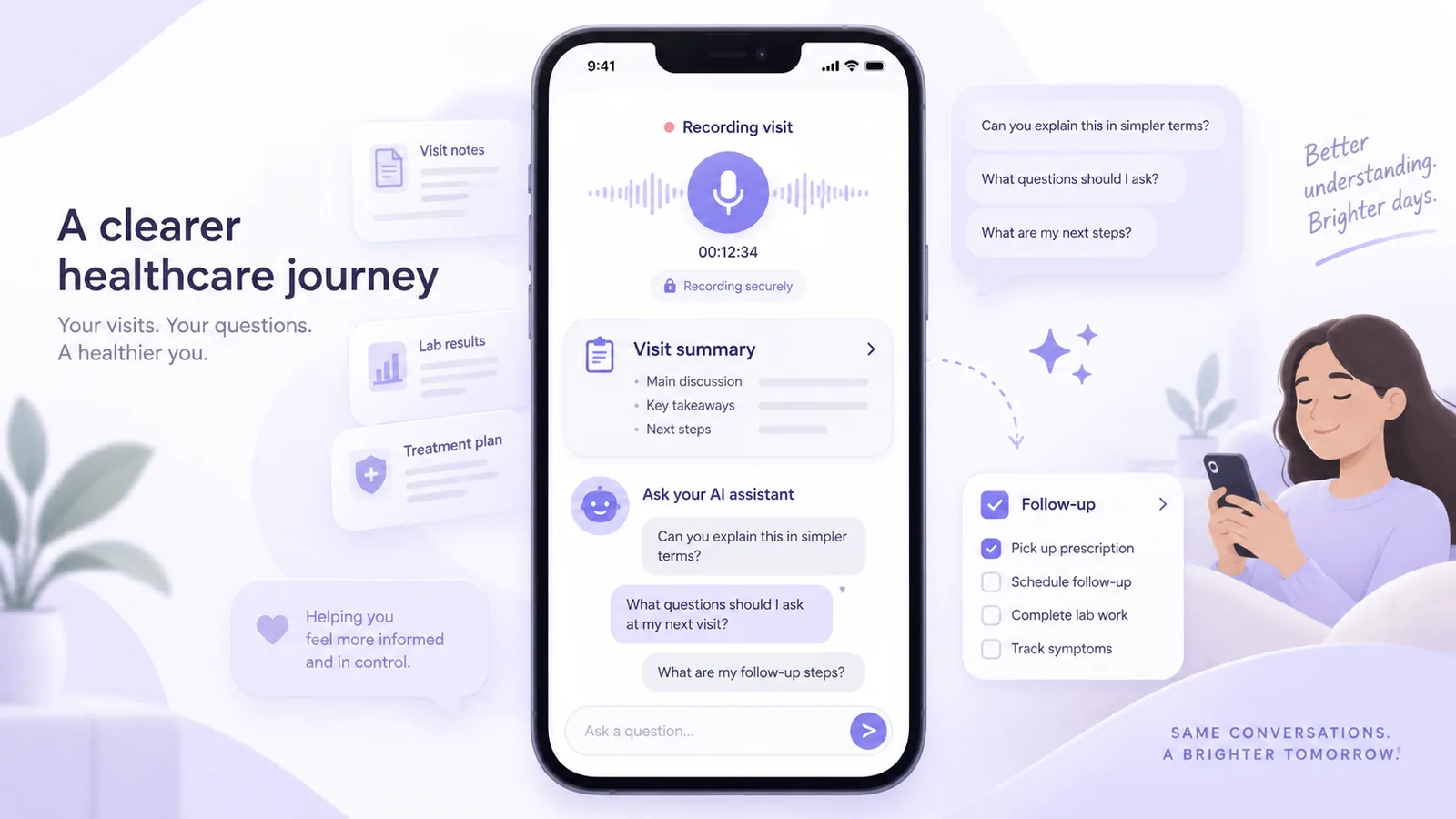
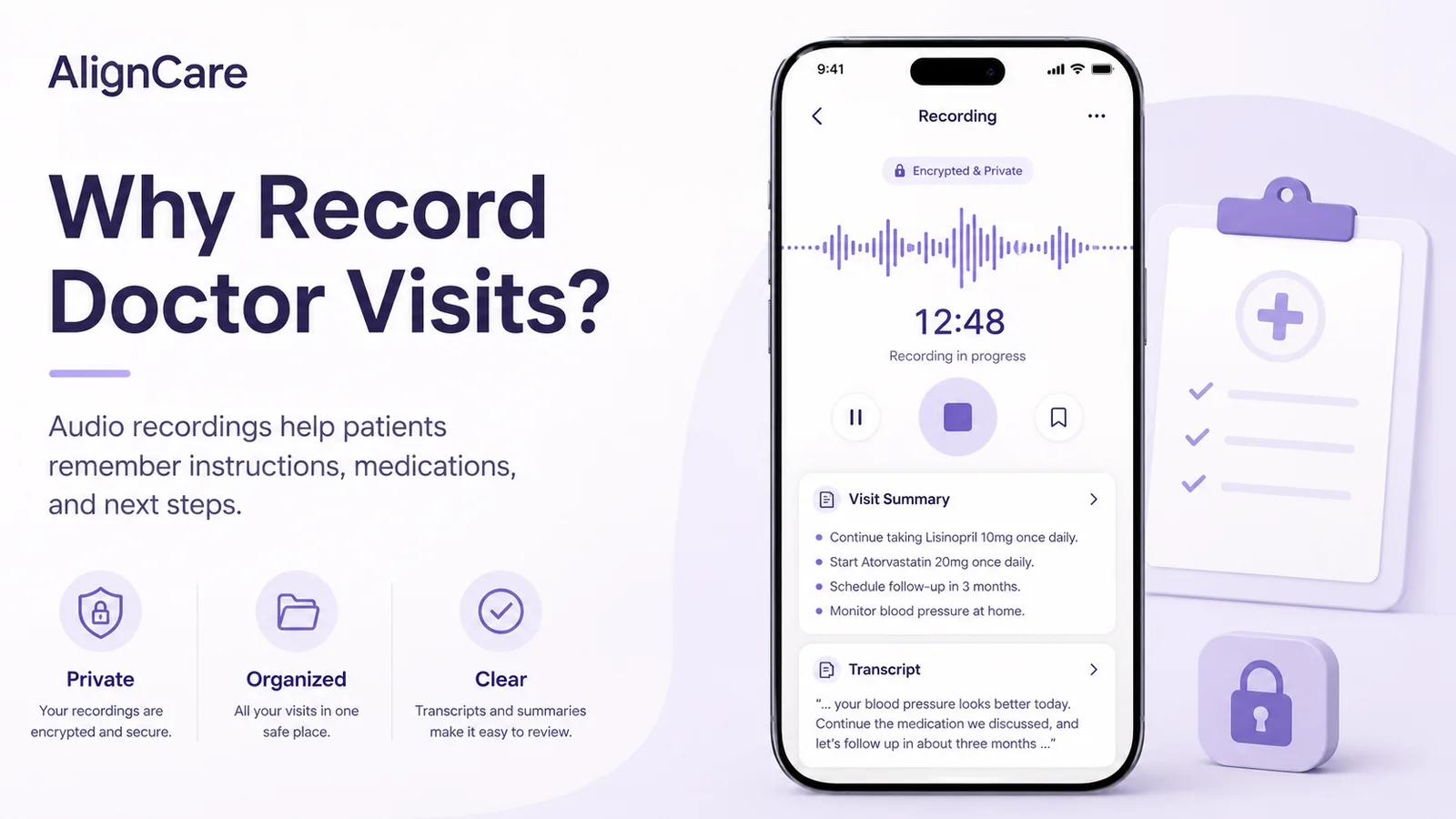
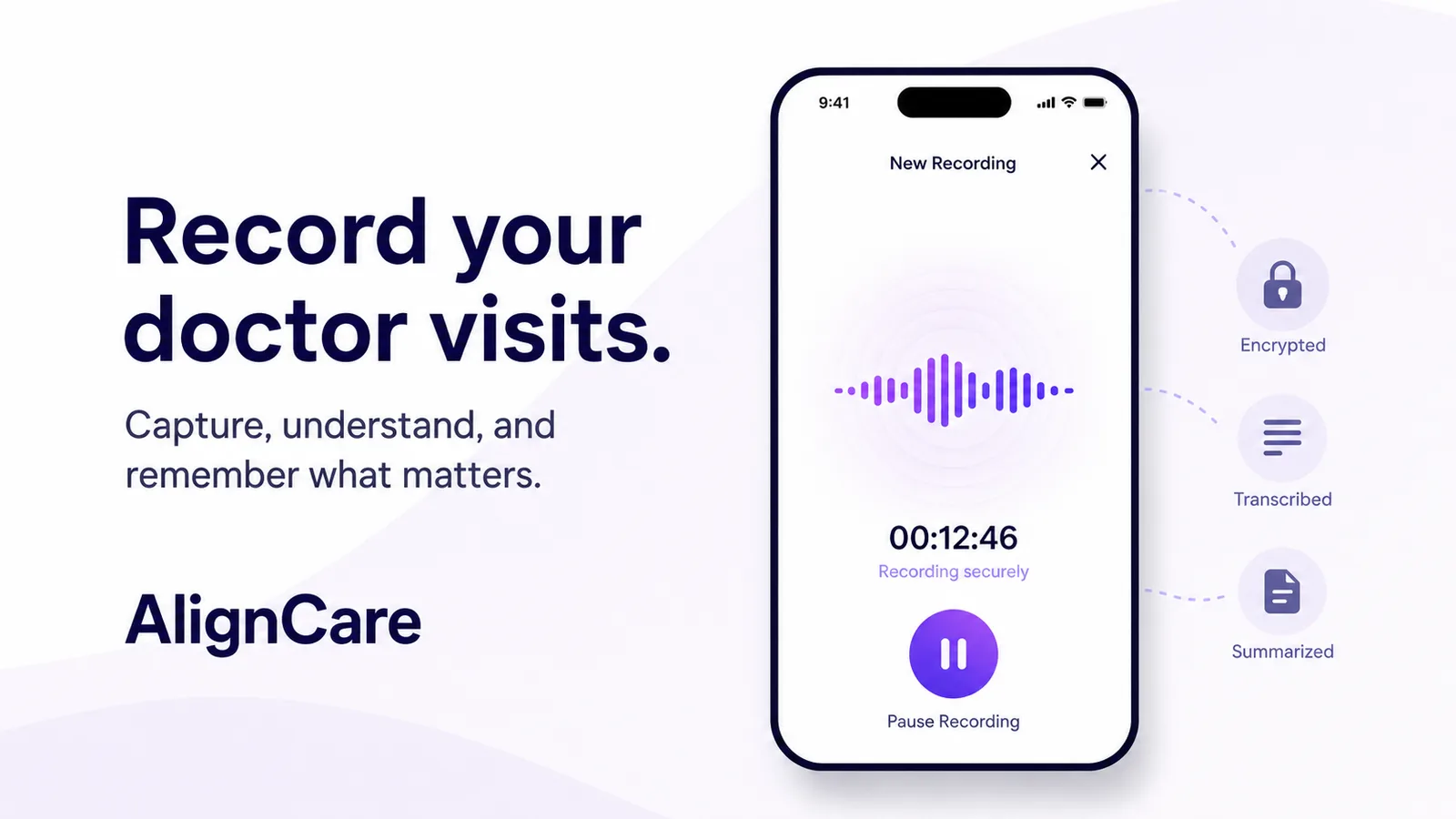
AlignCare helps patients audio record doctor visits, turn them into summaries and transcripts, and revisit the conversation later. AlignCare is available on iOS and Android, and patient data is encrypted.
After the visit: share the right information
Caregivers do not need access to everything. They need the information the patient chooses to share so they can help appropriately.
After a visit, it helps to review:
- Main concern discussed
- Diagnosis or possible cause mentioned
- Tests or referrals ordered
- Follow-up steps and timing
- Symptoms to monitor
- When to contact the doctor
- Open questions
- Tasks before the next appointment
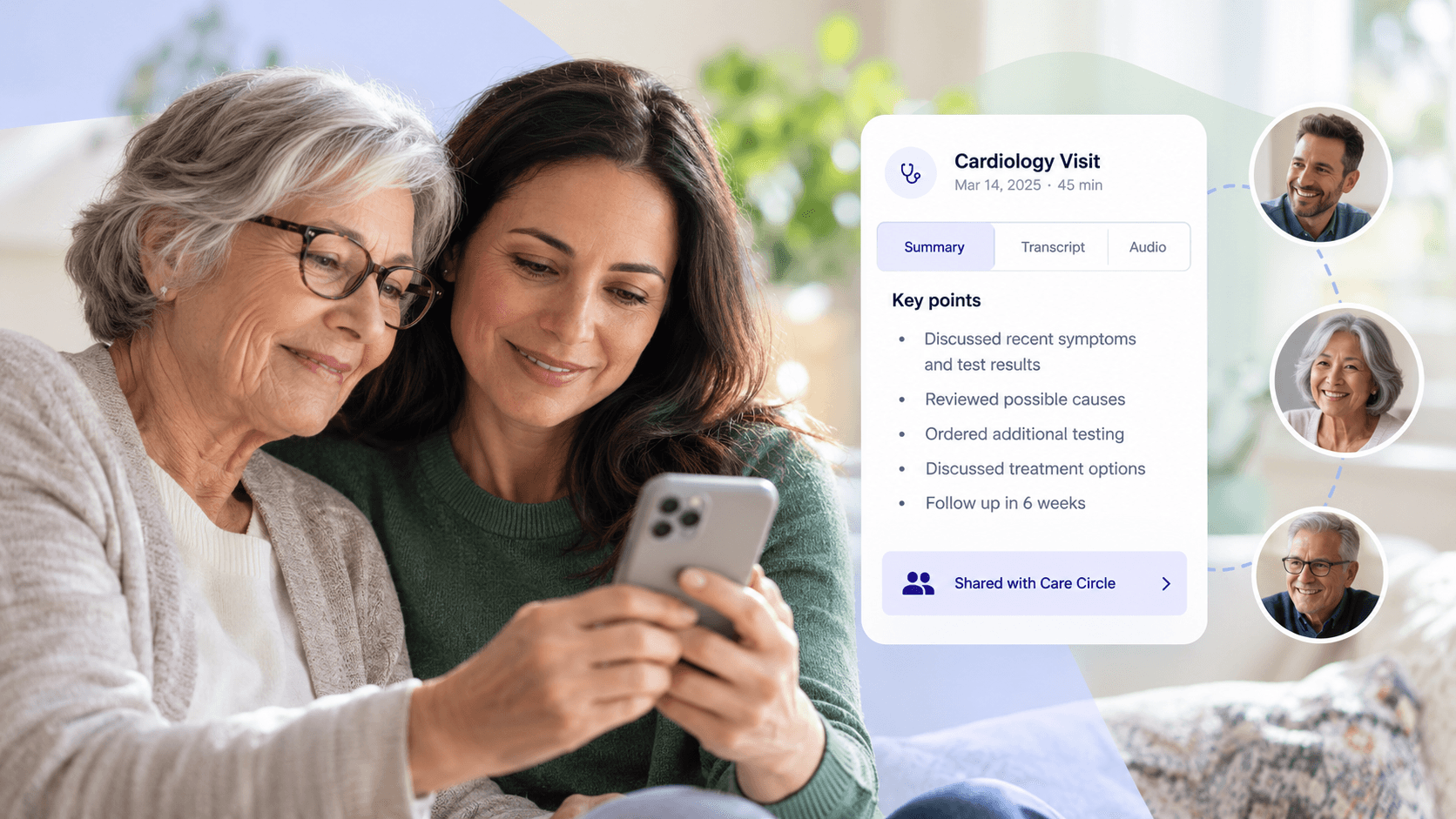
AlignCare's Care Circle helps with this. Patients can invite family members or caregivers, share selected visits and summaries, and stay in control of access. Access can be managed or revoked when needed [3].
Long-distance caregivers need shared context
Caregiving is harder when family members live apart. A daughter may be coordinating from another state. A sibling may be helping with follow-up. A spouse may need to update adult children after a specialist visit.
Without a shared record, families rely on memory, texts, and phone calls. A recorded visit summary gives everyone the same starting point.
Good caregiving is not about hovering. It is about having enough context to help at the right time.
Nora can help turn visits into next steps
Nora is AlignCare's AI health assistant, available by voice and chat. Patients can ask Nora questions about visit summaries, transcripts, medications, and uploaded health documents.
After a visit, a patient might ask Nora:
- "Summarize this visit for my caregiver."
- "What follow-up steps were discussed?"
- "What symptoms did the doctor say to monitor?"
- "Create a checklist before the next appointment."
- "What questions should we ask at the specialist visit?"
- "Explain this visit summary in plain language."
- "Help me write an update for my family."
Nora helps turn a visit into something easier to understand and act on, while the patient stays in control of what gets shared.
Privacy and consent matter
Patients should understand their state's recording laws before recording a visit. Even when recording is allowed, asking the clinician first is often the best experience.
Health information should only be shared with people involved in care. AlignCare and Care Circle give patients a more organized way to share selected information instead of relying on scattered texts, screenshots, or voice memos.
The bottom line
Caregiving works best when everyone is working from the same information.
Doctor visits create the context caregivers need: what changed, what matters, what to watch, and what comes next. AlignCare helps patients capture those visits, understand them, and share the right information with the people they trust.
For caregivers, that means fewer guessing games and clearer support.
References
- AARP and National Alliance for Caregiving, "Caregiving in the U.S. 2025."
- Rieger et al., "Should Consultation Recording Use Be a Practice Standard?" Psycho-Oncology.
- AlignCare, Care Circle.
Disclaimer
This article is for general informational and educational purposes only. It is not medical advice, legal advice, or a substitute for professional guidance. AlignCare does not provide medical advice, diagnosis, or treatment. Always consult a licensed clinician with questions about your health, diagnosis, medications, or treatment plan. Recording laws vary by state and situation, and they may change. Consult a qualified attorney if you have legal questions about recording a medical visit.